Blue Tang
Common name:
Blue Tang
Scientific Name:
Paracanthurus hepatus
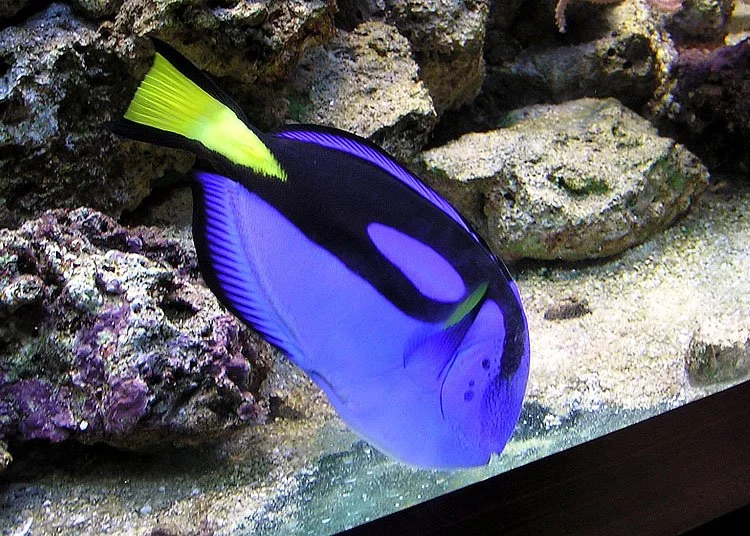
Scientific fact: Blue tangs belong to the surgeonfish family — they carry a venomous, scalpel-sharp spine on each side of the tail base that flips out for defense. That's where the "surgeon" name comes from. Fun fact: When stressed or scared, blue tangs will sometimes flop onto their side and lie perfectly still, playing dead — which has given more than a few owners a heart attack before the fish casually swims off.
Adult Size
Up to 12 inches (30 cm) — males and females similar in size
Recommended Group Size:
1 — keep singly; will fight other tangs and similarly shaped fish
Experience Level:
Intermediate to Advanced
Recommended Aquarium Size
Blue tangs are open-water swimmers that reach a foot long and stress easily in tight quarters — and a stressed blue tang is a sick blue tang. A single adult needs a 6-foot, 180-gallon tank. Juveniles are sold at 2–3 inches but outgrow smaller tanks fast, so plan for the adult from day one.
| Number of Fish | Minimum Tank Size | Notes |
|---|---|---|
| Single | 180 gallons (6-foot tank) | Adults reach 12 inches and swim constantly; anything shorter is cramped |
| Pair | Not recommended | Tangs fight their own kind; only attempt in very large systems |
| Juvenile (temporary) | 125 gallons | They are sold at 2–3 inches but outgrow small tanks fast — plan for the adult |
Tank Compatibility
Blue tangs are peaceful toward most fish but fiercely territorial with their own kind. They do best as the only tang in the tank, surrounded by calm community fish that won't outcompete or harass them
| Tankmate | Compatibility | Notes |
|---|---|---|
| Other tangs / surgeonfish | Avoid | Highly territorial toward its own family; will fight |
| Peaceful community fish (chromis, gobies, blennies) | Compatible | Good tankmates; won't compete with or harass them |
| Semi-aggressive fish (dwarf angels, larger wrasses) | Caution | Usually fine with enough space; monitor for chasing |
| Corals and invertebrates | Reef safe | Won't bother corals, shrimp, or crabs |
Water Parameters
Blue tangs need clean, stable reef water — and stability matters more than hitting exact numbers. Temperature swings are the fastest way to trigger an ich outbreak in this species.
| Parameter | Range | Notes |
|---|---|---|
| Temperature | 72–78°F (22–26°C) | Stability matters more than the exact number; swings trigger ich |
| pH | 8.1–8.4 | Standard reef range |
| Specific Gravity | 1.020–1.025 | Keep stable; acclimate slowly |
| dKH (Alkalinity) | 8–12 | Supports pH stability |
History and Origin
Native to the coral reefs of the Indo-Pacific, from East Africa to Japan and Australia, the Blue Tang (also sold as the Palette Surgeonfish or Hippo Tang) inhabits reef slopes and lagoons where it grazes algae in loose groups. It became one of the most recognized fish on Earth after Finding Nemo and Finding Dory — which unfortunately also made it one of the most impulse-purchased fish in the hobby, despite being a poor fit for most home aquariums.
Temperament and Personality
Generally peaceful but high-strung. Blue Tangs are active, constant swimmers that patrol the tank all day. They are territorial toward other tangs and similarly shaped fish, and they stress easily — stress in this species almost always shows up as ich (white spot disease). A stressed Blue Tang in a small tank is a sick Blue Tang; it is not a matter of if.
Other Pertinent Information
Diet: Herbivores; need daily greens — nori/seaweed on a clip, spirulina-based foods — plus mysis shrimp and quality pellets. A tang fed only meaty foods will fade and get sick.
Tank Setup: Enormous swimming room with live rock for grazing and hiding. They reach 12 inches and swim constantly; a 4-foot tank is cramped for an adult.
Maintenance: Extremely ich-prone — quarantine is not optional. Keep water pristine and never let them go hungry; an underfed tang is a stressed tang.
Breeding: Pelagic spawners; not bred in home aquariums.
Lifespan: 10–20 years in a well-kept aquarium.