Mandarin Dragonet
Common name:
Mandarin Dragonet
Scientific Name:
Synchiropus splendidus
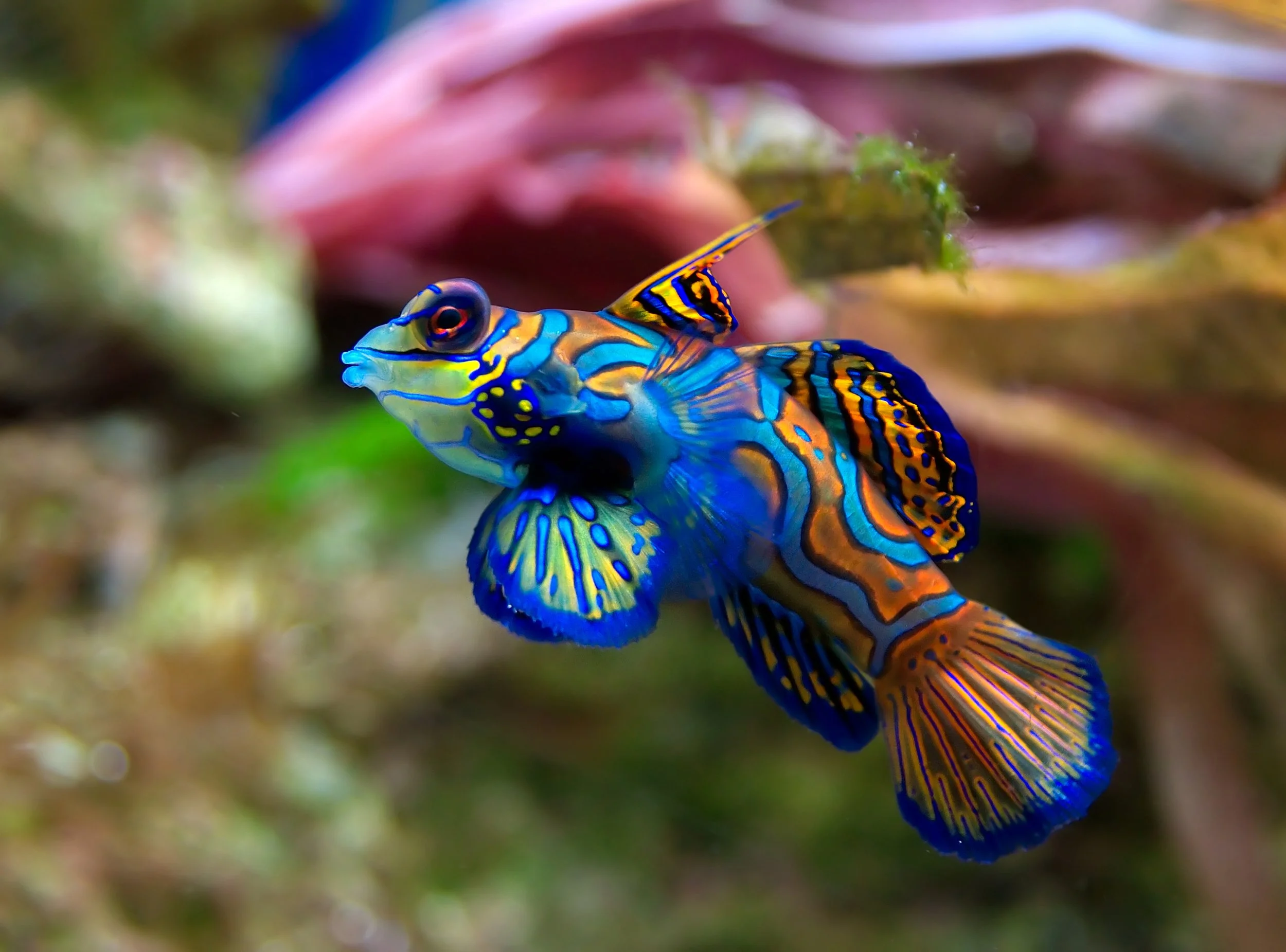
Photo: Luc Viatour, CC BY-SA 3.0, via Wikimedia Commons
SCIENTIFIC FACT: The Mandarin Dragonet is one of only two vertebrates on Earth with true blue pigment. Almost every other "blue" animal — blue jays, blue morpho butterflies, most reef fish — has no blue pigment at all; their color is a trick of light scattering off microscopic structures. The Mandarin's cells, called cyanophores, actually contain blue pigment. The only other fish known to share the trait is its close cousin, the Spotted Mandarin (Synchiropus picturatus). FUN FACT: The Mandarin is the best-dressed fish in the ocean — and it wears those colors as a warning label. It has no scales. Instead, its body is coated in a thick, foul-smelling, bitter-tasting slime that tells predators one bite is a mistake they'll only make once. All that beauty, and it tastes like regret.
History and Origin
Native to the Western Pacific, from the Ryukyu Islands to Australia, the Mandarin Dragonet inhabits sheltered lagoons and inshore reefs. It is widely considered one of the most beautiful fish in the ocean — and one of the most commonly starved in home aquariums. Wild mandarins spend every waking hour hunting tiny copepods and amphipods among the rockwork.
Temperament and Personality
Peaceful, slow, and methodical — almost the opposite of a typical reef fish. They drift from rock to rock, pecking at pods all day. They cannot compete with fast, aggressive feeders and will quietly waste away in a tank full of boisterous tankmates. Males will fight each other, so one male per tank
Recommended Aquarium setup
A Mandarin's tank is really a copepod farm with a fish in it. Start with a mature system — at least six months old — packed with live rock full of caves and crevices where copepods breed faster than the Mandarin hunts them. A refugium is the single best upgrade you can make: a predator-free zone where pods multiply and overflow into the display. Tankmates must be calm, slow feeders — gobies, blennies, firefish — never fast, aggressive eaters that will outcompete a fish that spends all day pecking one pod at a time. Boisterous neighbors don't just steal its food; they stress it into hiding instead of hunting, and a Mandarin that isn't hunting is a Mandarin that's starving.
| Tankmate | Compatibility | Notes |
|---|---|---|
| Peaceful community fish (gobies, blennies, firefish) | Compatible | Ideal tankmates; won't outcompete it for food |
| Fast, aggressive feeders (tangs, damsels, large wrasses) | Avoid | Will steal every bite; mandarins starve slowly and quietly |
| Other dragonets (males) | Avoid | Males fight; one male per tank |
| Corals and invertebrates | Reef safe | Completely reef safe; ignores corals and inverts |
Temperament and Personality
Peaceful, slow, and methodical — almost the opposite of a typical reef fish. They drift from rock to rock, pecking at pods all day. They cannot compete with fast, aggressive feeders and will quietly waste away in a tank full of boisterous tankmates. Males will fight each other, so one male per tank.
| Parameter | Range | Notes |
|---|---|---|
| Temperature | 72–78°F (22–26°C) | Keep stable; sensitive to rapid swings |
| pH | 8.1–8.4 | Standard reef range |
| Specific Gravity | 1.020–1.025 | Keep stable; acclimate slowly |
| dKH (Alkalinity) | 8–12 | Supports pH stability |
Other Pertinent Information
Diet: This is everything. Wild-caught mandarins are obligate pod-eaters and most will not recognize frozen or prepared food. They need a large, mature tank (6+ months old) with a thriving copepod population or a refugium. Captive-bred mandarins (now widely available) are raised on frozen foods and pellets — dramatically easier and the responsible choice.
Tank Setup: Lots of live rock with caves and crevices where pods breed. Keep with calm, slow-feeding tankmates.
Maintenance: The number one killer is starvation, which takes weeks — the fish looks fine until it doesn't. If its belly looks pinched, it is already in trouble.
Breeding: Now commercially captive-bred; wild spawning happens at dusk with pelagic eggs.
Lifespan: 10–15 years with proper, consistent feeding.